
Views: 0 Author: Site Editor Publish Time: 2026-01-27 Origin: Site


The visual appeal of heat-sensitive drinkware is undeniable. A black vessel transforms instantly when hot liquid touches it, revealing a vibrant image underneath. For promotional markets and retail brands, this "magic" moment drives engagement and social sharing. However, for merchandisers and designers, relying on magic is a strategy for failure. Understanding the engineering reality behind these products is critical for quality control.
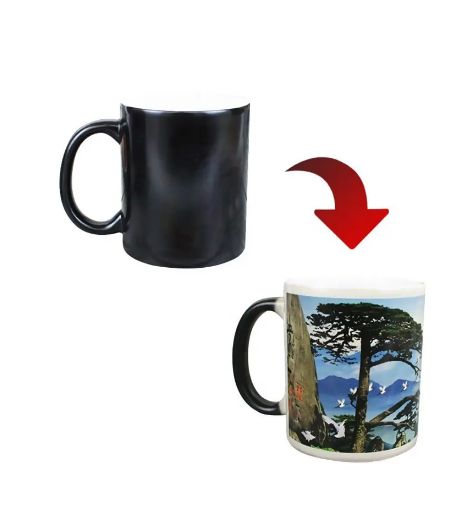
Color change mugs, frequently called magic mugs or thermochromic mugs, are vessels that utilize heat-sensitive coatings to toggle transparency. They do not technically change color; they change their ability to conceal what lies beneath. This distinction drives every design decision, from color selection to durability testing. This guide positions the technology not merely as a novelty, but as a specific chemical application. It serves as an evaluation framework for professionals looking to source high-quality inventory without facing unexpected production errors.
Mechanism: It relies on Leuco dyes inside microcapsules that manipulate pH levels to become transparent when heated, revealing the base layer.
Limitations: Dark colors cover best; you cannot hide a dark logo under a light heat-sensitive layer.
Safety: Modern thermochromic inks are generally safe and BPA-free, but buyers must verify FDA compliance for food-contact surfaces.
Longevity: The effect is not permanent; UV exposure and high-heat dishwashing are the primary causes of failure.
To evaluate product quality, you must first understand the chemical engine driving the transformation. Thermochromism is the property of substances to change color due to a change in temperature. In the context of drinkware, manufacturers rarely use the same materials found in high-precision medical thermometers. Instead, they rely on a specific, robust class of chemistry known as Leuco Dyes.
The industry standard for promotional drinkware is the Leuco-dye microcapsule. While other thermochromic materials exist, such as Liquid Crystals, they are ill-suited for mugs. Liquid Crystals are capable of displaying a spectrum of colors (like a mood ring) and are highly sensitive to minute temperature changes. However, they are expensive, difficult to apply to curved ceramic surfaces, and lack the durability required for daily use.
In contrast, Leuco dyes offer a distinct binary advantage. They function like an "on/off" switch. They are cheaper to produce in bulk and offer the high-contrast opacity needed to conceal a hidden image effectively. This makes them the preferred choice for color change mugs intended for retail or corporate gifting.
| Feature | Leuco Dyes (Mugs) | Liquid Crystals (Thermometers) |
|---|---|---|
| Visual Effect | Opacity Shift (Dark to Clear) | Spectral Shift (Black to Blue/Green/Red) |
| Transition | Binary (Conceal/Reveal) | Continuous Gradient |
| Durability | High (Suitable for simple coatings) | Low (Requires specialized protection) |
| Cost Efficiency | High | Low |
The "magic" occurs inside millions of microscopic capsules embedded in the coating. These capsules range in size from 1 to 10 microns, similar to the toner particles in a laser printer. Each capsule is a self-contained chemical system containing three primary components: the dye itself (the colorant), a weak acid (the developer), and a solvent (the medium).
The interaction between these three components dictates the visual state of the mug. It is a reversible reaction driven by the physical state of the solvent.
Cold State: When the mug is at room temperature, the solvent inside the microcapsule is solid. In this solid state, the solvent forces the dye and the acid developer into close proximity. They bond chemically, which causes the molecule to reflect visible light. To the human eye, the coating appears opaque and colored (typically black, blue, or red).
Hot State: As heat from the beverage transfers through the ceramic, the solvent melts into a liquid. This phase change separates the dye from the acid developer. The bond breaks. Without the developer, the dye returns to its "Leuco" (white or colorless) form. The microcapsules become transparent.
The outcome is crucial for buyers to understand: the pigment does not turn into a different color. It turns invisible. You are seeing through the top layer to whatever permanent print exists on the ceramic surface underneath.
Precision is vital for the user experience. If the activation temperature is too low, the mug might reveal the image on a warm summer day in a warehouse. If it is too high, the coffee must be dangerously scalding to trigger the effect.
Manufacturers set the standard activation point for hot beverages at 113°F (45°C). This threshold ensures the reveal happens only when a fresh hot liquid is poured, maintaining the surprise element. Conversely, for plastic cold cups, the chemistry is reversed. The trigger point is roughly 59°F (15°C), causing the color to appear rather than disappear when ice water chills the surface.
The chemistry of the ink is only half the battle. The substrate—the material of the mug itself—dictates how that ink is applied and how long it lasts. Different materials require distinct bonding processes to prevent the image from peeling off after a few washes.
Bonding organic ink to inorganic ceramic is chemically difficult. Standard inks sit on top of the glaze and can scratch off easily. High-quality manufacturers utilize the "Sol-Gel" process to solve this. This involves a chemical solution (sol) that evolves into an integrated network (gel) of solid particles.
This coating cures to create a rigid silica matrix. It effectively creates a hybrid layer that bonds partially into the ceramic glaze while holding the thermochromic microcapsules in suspension. The primary challenge here is the "thermal expansion mismatch." Ceramic expands slightly when heated. If the coating expands at a different rate than the mug, the image will develop a network of fine cracks known as "crazing."
When sourcing a custom color changing mug, ask suppliers about their curing process. A properly cured Sol-Gel coating resists peeling far better than standard sublimation coatings, which often feel like a sticker applied to the surface.
Plastic "Cold Change" cups, often seen at festivals or stadium events, utilize a different production method. Instead of a surface coating, the thermochromic pigment is often mixed directly into the "masterbatch"—the raw plastic pellets used in injection molding.
This integration means the color change effect runs through the entire thickness of the cup wall. It offers superior durability against scratching because the color is not a surface layer; it is the material itself. However, this limits design complexity. You cannot easily hide a complex photo inside the plastic wall; these items usually rely on the entire cup changing color (e.g., from frost white to blue).
When comparing samples from different factories, look for these specific indicators of quality:
Weight & Heat Retention: Ceramic mugs should have substantial wall thickness. Thicker walls hold heat longer, keeping the image revealed for an extended period. Glass changes color faster due to higher thermal conductivity but cools down rapidly, hiding the image too soon.
Surface Texture: Run your thumb over the surface. High-quality mugs feel glossy and smooth, almost indistinguishable from standard glazing. A rough, rubbery, or "sticker-like" texture indicates a cheaper transfer application that is likely to peel.
Transition Speed: A quality coating should begin transitioning within seconds of pouring and complete the reveal within 30–45 seconds.
Designing for thermochromic ware is fundamentally different from designing for standard print. You are not creating a static image; you are directing a user experience with a timeline. Designers must treat the product as a "Two-Act Play."
The most successful designs utilize the narrative potential of the medium.
Act 1 (Cold): This is the concealment layer. To function effectively, this layer must be a dark color. Black, navy blue, and deep red are the standard choices because they absorb the most light, effectively hiding the print underneath.
Act 2 (Hot): The reveal. Once the top layer becomes transparent, the underlying print is visible. This base layer is a permanent decal or sublimation print. Because it is protected under the coating, it can be a full-color, photorealistic image.
Merchandisers often request designs that physics simply cannot support. Understanding these limitations saves time and prototyping costs.
The Ghosting Effect is the most common failure. This occurs when a designer attempts to hide a dark logo (like a black bold font) under a lighter heat-sensitive layer (like light blue or red). It will not work. The black ink on the bottom absorbs light differently than the top layer, and it will bleed through, remaining faintly visible even when the mug is cold. This kills the surprise.
Color Matching Limitations are also critical. You cannot achieve metallic (gold/silver) or neon effects in the heat-sensitive layer itself. The microcapsules are matte by nature. While the base layer can be vibrant, the concealment layer will always have a slightly muted, matte finish compared to a standard glossy glaze.
The best applications lean into the transformation. Designs that tell a "Before & After" story resonate best with consumers. Examples include a sleeping face that wakes up, a battery icon that recharges from empty to green, or a dark forest that reveals hidden animals.
Commercially, these items have high utility beyond aesthetics. Brands use them for "Secret Discount Codes" revealed only to customers who brew a cup, or safety indicators labeled "Too Hot" that vanish once the beverage reaches a drinkable temperature.
Whenever chemicals and food contact surfaces mix, safety is the priority. Consumers frequently ask: "Is the color changing paint toxic?"
The verdict is that modern thermochromic materials are generally non-toxic. The Leuco dyes themselves are encapsulated, meaning they do not directly touch the skin or mouth. However, the carrier—the polymer coating and solvents used to apply the dye—is the area of concern.
Buyers must request specific documentation from suppliers to ensure compliance:
FDA 21 CFR: This verification ensures that materials used are FDA-compliant for food contact. Even if the coating is on the exterior, it must meet safety standards.
BPA-Free Certification: This is essential for plastic cold-change cups. Bisphenol A is a hardener often found in older plastics, and modern consumers actively avoid it.
Lead & Cadmium Testing: This is critical for the base ceramic mug. While the thermochromic ink might be safe, the glaze on the imported ceramic mug underneath must pass Prop 65 (California) and FDA lead leaching tests.
You may notice that many color change mugs have a white band or a gap of approximately 2cm at the top rim. This is not a printing error; it is a safety feature known as "Lip Line Protection." Manufacturers intentionally leave this area free of heat-sensitive coating. This ensures that the user's lips touch only the standard, fired ceramic glaze. It minimizes any risk of coating ingestion over years of use and provides a smoother mouthfeel than the slightly textured thermochromic layer.
Thermochromic mugs are novelty items, not heirlooms. Their total cost of ownership (TCO) is higher, and their lifespan is shorter than standard ceramic ware. Managing customer expectations regarding longevity is vital.
Thermochromic dyes are chemically sensitive to ultraviolet (UV) radiation. Prolonged exposure to direct sunlight causes the chemical bonds in the dye to break down irreversibly. Industry professionals call this "sunburn."
If a mug is left on a sunny windowsill for weeks, the microcapsules will degrade. The mug may stop changing color entirely, becoming permanently stuck in either the dark or clear state. High-quality coatings include UV inhibitors, but no thermochromic mug is immune to sun damage.
The rule for these products is strict: Hand Wash Only. While this may seem inconvenient, the reasoning is sound. Dishwashers destroy these mugs through two mechanisms:
Heat Sterilization: The drying cycle in a dishwasher often exceeds the thermal tolerance of the organic polymer coating, causing it to cloud or loosen.
Abrasive Detergents: Modern dishwasher tabs are highly alkaline and abrasive. They strip away the polymer layer over time, leaving the image patchy and ruined.
Microwaving is generally not recommended. While the ceramic base is microwave-safe, the localized superheating of the polymer coating can cause blistering. The coating absorbs heat differently than the ceramic, leading to hot spots that can burn the polymer or cause it to peel away from the surface.
Despite these limitations, the ROI on color change drinkware remains high. These units typically command a $2–$4 premium over standard mugs. In exchange, they offer significantly higher engagement rates. They are best suited for high-impact gifting where the initial "wow" factor drives brand recall, rather than for heavy-duty daily office use where dishwasher compatibility is a must.
Color change mugs are less "magic" and more "smart chemistry." They represent a clever balance between chemical engineering and creative design. For buyers, the secret to successful sourcing lies in looking past the novelty. Focus on the durability of the Sol-Gel coating, verify the safety of the base ceramic, and design within the strict "dark-covers-light" constraints of the medium.
By treating these products as sophisticated instruments rather than simple commodities, brands can deliver a user experience that lasts. Choose suppliers who can provide concrete durability data and clear safety certifications to ensure your campaign reveal is memorable for the right reasons.
A: The effect typically lasts for 2 to 5 years, depending heavily on usage. Mugs that are hand-washed and kept out of direct sunlight will maintain their color-switching ability much longer. Frequent dishwasher use or UV exposure will significantly shorten this lifespan, causing the "magic" layer to stop reacting to heat.
A: The most likely culprits are UV damage or dishwasher heat. If the mug was exposed to strong sunlight for long periods, the UV rays destroyed the light-sensitive dyes. Alternatively, the high heat and harsh chemicals of a dishwasher cycle may have degraded the polymer coating, locking the dye in a permanent state.
A: No, it is generally not recommended. While the mug won't explode, the intense heat can degrade the thermochromic coating. This can cause the image to blister, peel, or lose its ability to change color properly. To preserve the image, stick to pouring hot water from a kettle.
A: No. Physics dictates that the "cold" state must be darker than the hidden image to conceal it effectively. A white coating reflects light, which would allow the hidden image underneath to show through immediately. You need a dark color like black, navy, or deep red to absorb light and hide the surprise.
A: For standard hot mugs, the activation temperature is usually 113°F (45°C). This ensures the change happens when you pour coffee or tea. For cold plastic cups, the trigger is typically 59°F (15°C), causing the color to appear when ice water cools the plastic.


