
Views: 0 Author: Site Editor Publish Time: 2025-12-09 Origin: Site


The direct answer to the most common conversion question is simple: one half-gallon equals exactly 64 US fluid ounces. While the math is straightforward, visualizing that volume in a practical context is often much harder. Standing in a store aisle or browsing online for drinkware, it is difficult to determine if a 64oz jug is a hydration necessity or a bulky inconvenience.
Understanding this volume is essential for more than just tracking daily water intake. It plays a pivotal role in selecting the right vessel for your lifestyle, whether you are a desk-bound professional or an outdoor enthusiast. For businesses and creators, this sizing distinction is even more critical. Designing a Custom Magic Cup requires a clear understanding of capacity to ensure logos and photos render correctly on the curved surface. Whether you are aiming to drink a half-gallon a day or sourcing the perfect promotional gift, grasping the scale of 64oz versus standard cup sizes ensures you make the right choice.
The Math: One half-gallon equals 64 fluid ounces, or roughly four standard 16.9oz water bottles.
The "Magic Cup" Factor: A standard Color Change Mug (Magic Cup) typically holds 11oz or 15oz; you would need to refill it approximately 4–6 times to consume a half-gallon.
Evaluation: For desk workers, a refillable Sublimation Cup offers better temperature control and ergonomics than carrying a bulk 64oz jug.
Design Impact: When ordering custom drinkware, "bigger" isn't always better—consider the sublimation print area relative to the cup’s ounces.
To make informed decisions about drinkware, we must first establish a solid baseline for what 64 fluid ounces looks like in the real world. While the number 64 is precise, our mental image of it can be vague. Breaking this down into standard unit conversions and familiar objects helps bridge the gap between abstract math and daily physical usage.
If you are sourcing products globally or following a specific hydration plan, you might encounter various units of measure. Here is how a half-gallon translates across different systems:
| Unit of Measure | Equivalent to 1/2 Gallon (US) |
|---|---|
| US Fluid Ounces | 64 fl oz |
| Liters | Approx. 1.89 Liters |
| Quarts | 2 Quarts |
| US Pints | 4 Pints |
| Standard Measuring Cups | 8 Cups (8oz each) |
Numbers on a chart are useful, but physical comparisons are better for visualization. If you are trying to explain the volume of a half-gallon to a customer or visualizing it for your own intake, use the "Water Bottle" rule. It takes roughly four standard store-bought water bottles (the 16.9oz variety found in vending machines) to equal a half-gallon. Imagine lining up four of those bottles on your desk; that is the total volume you are dealing with.
For coffee lovers, the benchmark changes slightly. A half-gallon is equivalent to roughly three "Venti" (20oz) hot drinks plus a small sip left over. This comparison is particularly relevant when discussing thermal drinkware. While a user might consume a half-gallon of water comfortably throughout a day, consuming that same volume in hot coffee is rare. This distinction drives the market demand for smaller, 11oz to 15oz vessels rather than massive 64oz coffee mugs.
A critical note for international buyers involves the difference between US Fluid Ounces and UK (Imperial) Ounces. They are not identical. An Imperial gallon is significantly larger than a US gallon. Consequently, a UK half-gallon equals 80 Imperial fluid ounces (approximately 77 US fl oz). If you are ordering a Sublimation Cup from an international supplier, always verify which "ounce" standard they use. Assuming a US standard when the product is built to Imperial specifications can lead to packaging mismatches and capacity errors.
Once you understand that a half-gallon is 64 ounces, the next question is logistical: how do you want to carry that liquid? The market offers two distinct approaches. You can carry it all at once in a massive jug, or you can use a smaller, more aesthetic vessel like a Magic Cup and refill it periodically. Both strategies have merit, but they serve different environments.
The term "Magic Cup" refers to a heat-sensitive vessel, often called a Color Change Mug. These are most commonly manufactured in 11oz or 15oz sizes. The reason for this size limitation is physical utility. These mugs rely on heat activation to reveal a hidden image. Keeping 64 ounces of liquid hot enough to sustain that effect for the duration of consumption is incredibly difficult without heavy vacuum insulation, which interferes with the external heat transfer required for the color change.
Therefore, the workflow for a Magic Cup user is one of refills. To hit a half-gallon hydration goal using a 15oz mug, a user needs roughly four full refills. This promotes movement. It forces the user to stand up, walk to the water cooler or coffee pot, and stretch. For office workers, this "micro-break" is often healthier than sitting stagnant for hours.
Conversely, the 64oz insulated growler or jug represents the "one-and-done" approach. These vessels are popular in the fitness and outdoor communities. The primary benefit is independence; you do not need a refill source nearby. However, the trade-offs are significant. A 64oz jug filled with water weighs over 4 pounds (approx. 1.8 kg).
This weight makes the vessel cumbersome for standard office environments. Lifting a 4-pound weight to your mouth every time you want a sip can be ergonomically straining. Furthermore, these large vessels often lack the aesthetic appeal or customization potential of a ceramic Sublimation Cup. They are built for rugged utility rather than visual engagement.
To help simplify the choice between a large volume vessel and a standard mug, consider this decision matrix:
Choose a Half Gallon Jug if: You are working outdoors, hiking, or situated at a job site without reliable access to potable water. It is also the right choice for manual laborers who cannot leave their station frequently.
Choose a Magic Cup if: You work at a desk, enjoy hot beverages like tea or coffee, and value ergonomics. If you prioritize visual engagement—such as the delight of a Color Change Mug revealing a photo—the smaller 11oz to 15oz capacity is far superior.
For businesses and personalized gift creators, the relationship between ounces and surface area is vital. Capacity dictates the printable canvas. A common mistake is assuming that a larger cup automatically allows for a better design. In the world of sublimation printing, "bigger" often introduces new complexities regarding image distortion and heat application.
Capacity determines the printable dimensions. A standard 11oz mug provides a rectangular print area of approximately 8.5 x 3 inches. This aspect ratio is perfect for panoramic photos, wrap-around logos, or standard landscape images. It is the industry standard for a reason; the equipment used to print these mugs is ubiquitous and affordable.
A 64oz vessel, by contrast, requires large-format printing capabilities. The surface area is vast, often requiring specialized ovens rather than standard mug presses. If you are looking to create a Custom Magic Cup for a promotional event, sticking to the 11oz–15oz range ensures you can find a printer easily and keeps setup costs low. The curvature of a massive half-gallon jug can also make it difficult to apply the heat-sensitive coating evenly, resulting in patchy "magic" reveals.
Curvature affects image perception. On a massive 64oz cylinder, a standard logo might look stretched or wrapped too far around the side to be legible from a single angle. Smaller capacity cups have a tighter radius, but because the total width is smaller, the human eye can take in the entire design at a glance.
Detailed logos and high-resolution photo gifts generally perform better on standard Color Change Mugs. The broad, often textured surfaces of large hydration jugs are better suited for simple vector graphics or laser engraving rather than the complex, full-color sublimation that makes magic cups so special.
The physics of the "reveal" also favor smaller capacities. The thermochromic coating on a Magic Cup becomes transparent when exposed to heat. To get a crisp, fast reveal, you need to fill the cup with hot liquid. Filling a 64oz container with boiling water is rarely practical or safe for casual drinking.
An 11oz or 15oz size is optimized for the thermal physics required to trigger the color change effectively. The liquid mass is sufficient to heat the ceramic walls quickly, but not so dangerous that it becomes a liability. If you want the "wow" factor of a hidden image appearing, the half-gallon size is functionally the wrong tool for the job.
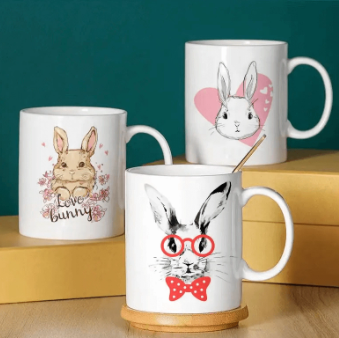
When discussing capacity, we must also discuss material. The material of the cup defines how it handles those 64 ounces of liquid over time. The divide is generally between the classic ceramic used for magic mugs and the stainless steel used for large travel tumblers.
Most Magic Cups utilize ceramic as their base material. Ceramic provides a smooth, neutral surface that accepts the thermochromic coating exceptionally well. It feels substantial in the hand and does not impart any metallic taste to coffee or tea.
However, ceramic has thermal limitations. It is not vacuum insulated. While it absorbs heat well (facilitating the color change), it releases heat relatively quickly. If you were to have a theoretical 64oz ceramic mug, the coffee would likely go cold long before you finished it. This reinforces why ceramic vessels are kept to smaller, single-serving sizes.
If your goal is to keep a half-gallon of water ice-cold for 24 hours, a stainless steel Sublimation Cup is the winner. Vacuum-insulated steel tumblers are available in 20oz, 30oz, and even 64oz sizes. They prevent heat transfer, keeping the external surface at room temperature while the inside remains freezing or boiling.
Here lies the decision point: If the goal is thermal efficiency for large volumes, steel wins. If the goal is the interactive "surprise" element of a hidden photo appearing with heat, the ceramic Magic Cup is the superior choice. While steel cans be coated for sublimation, the "magic" color-changing effect is most dramatic and responsive on ceramic surfaces due to how the material conducts heat.
Durability scales differently with size. A heavy 64oz ceramic jug would be incredibly fragile; a single drop would shatter it instantly due to its own weight. This is why large vessels are almost exclusively steel or plastic. Conversely, an 11oz ceramic mug is fragile but manageable. If you need a vessel for a rugged environment (construction site, camping), skip the ceramic magic mug and opt for a stainless steel variant, even if you lose some of the novelty features.
Whether you are buying for yourself or stocking an inventory for a business, you must evaluate the Return on Investment (ROI) of your drinkware choice. This isn't just about money; it is about the "Cost Per Ounce" versus the user experience.
A bulk 64oz jug costs more upfront. You are paying for more raw material (steel) and shipping weight. However, on a strict "dollars per ounce of capacity" basis, it is often efficient. Yet, utility is not the only metric.
A Custom Magic Cup offers a lower entry price point but delivers a significantly higher "emotional ROI." The interactive nature of the color-changing feature creates a moment of delight every morning. For brands, this emotional connection is valuable. A customer might use a plain 64oz jug for water, but they will talk about the mug that reveals a funny message when they pour their coffee. The engagement value of the smaller, interactive vessel often outweighs the raw volume utility of the larger jug.
Finally, consider the logistics of gifting. If you are sending corporate gifts or merchandise, a 15oz Color Change Mug is universally usable. It fits in standard cupboards, works with standard coffee machines (like Keurigs), and sits well on any coaster.
A half-gallon jug is a niche item. It is physically large and may clutter the recipient's space if they are not a heavy hydration tracker. Unless you know the recipient specifically wants a massive growler, the 15oz Magic Cup is the safer, more versatile bet that balances generous capacity with universal usability.
While a half-gallon (64oz) is a specific and popular volume target for daily hydration, the vessel you choose to reach that number matters immensely. The math is simple, but the experience varies wildly depending on whether you choose a single massive container or a refillable, interactive cup.
For raw utility, outdoor work, and infrequent refills, the half-gallon jug is the correct tool. However, for the office, for coffee lovers, and for anyone who values personalization, the Magic Cup (11oz–15oz) is the superior choice. It encourages healthy movement through refills, offers better ergonomics, and provides a unique canvas for creativity that large jugs simply cannot match. When designing your next piece of custom drinkware, remember that the best vessel isn't always the biggest one—it's the one that fits seamlessly into the user's daily ritual.
Ready to create a design that truly stands out? Browse our selection of Custom Magic Cups and sublimation blanks to find the perfect balance between capacity and creativity.
A: Yes, in the US Customary System, 64 fluid ounces is exactly one half-gallon. It is also equal to 2 quarts, 4 pints, or roughly 1.89 liters. Note that this applies to US fluid ounces, not the Imperial system used in the UK.
A: It takes approximately 5.8 fills of an 11oz cup to reach a half-gallon. If you use a larger 15oz mug, you will need just over 4 full refills to hit the 64oz mark.
A: True "Magic" (heat-activated color changing) mugs are rare in 64oz sizes. Keeping that volume of liquid hot enough to sustain the color-change effect is difficult physically. Most color-changing cups are 11oz to 15oz to optimize the thermal reaction.
A: Yes. Fluid ounces measure volume, while dry ounces measure weight. This guide refers strictly to fluid ounces for beverages. 64 fluid ounces of water weighs about 4 pounds, but 64 dry ounces of flour would be a different volume entirely.
A: No. An Imperial (UK) gallon is larger than a US gallon. A UK half-gallon is 80 Imperial fluid ounces (approx. 77 US fl oz). Always check the manufacturing standard of your drinkware to ensure you are getting the capacity you expect.


